
“All generations will call me blessed…” (Mary, Singing in her Magnificat, from St. Luke’s Gospel)
Let’s take a moment and picture ourselves in the newly restored Notre Dame in Paris, at a midnight mass in this beautiful, Gothic cathedral. What stands out to you? Perhaps you are taken with a choir singing in four-part harmony, with that majestic, historic organ pulsating in your chest. Or, maybe it’s the smell of incense and the soft glow of candles. The architecture is stunning. Perhaps your eyes dart between the centuries-old stained glass windows, telling the stories of Christ, until pausing on one of the rose windows. As you bring your gaze back to the front of the church, your eyes glance at the Notre-Dame de Paris – the Virgin Mother with the Christ Child. There is something particularly beautiful about this statue. Could it be that this image speaks of something true? Something transcendent? Regardless of our tradition, we all agree on its beauty.
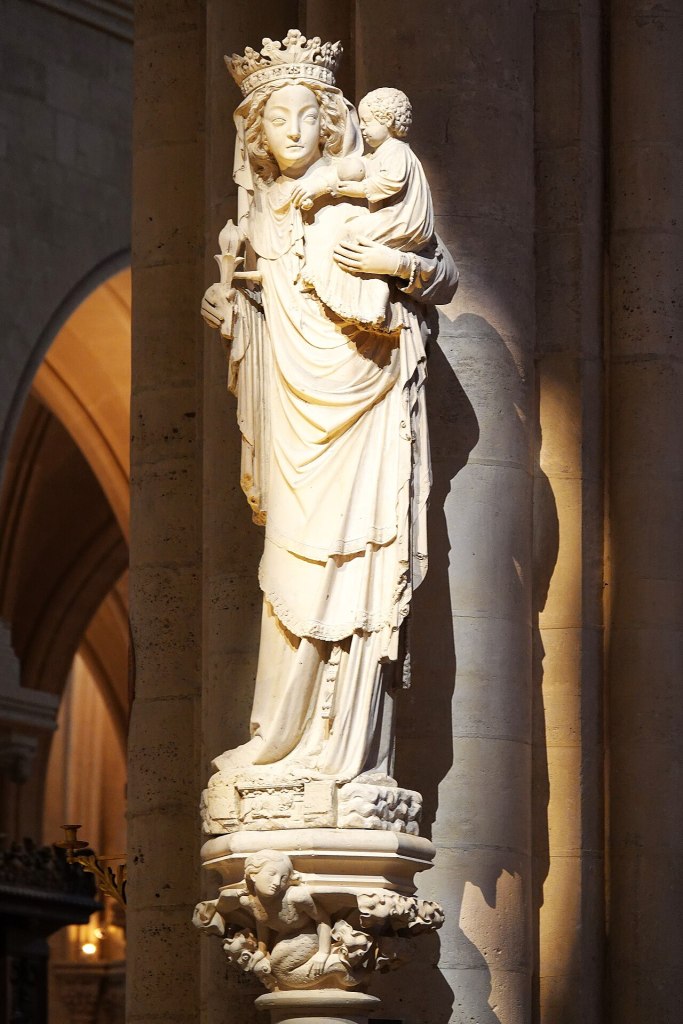
When looking at a work of art, one considers the intention of the artist, or the one commissioning the art. Is it possible that this famous statue was carved with reverence for God – for Christ and his Mother? Is it possible that the same Spirit who inspired composers to write great musical scores and hymns inspired this artwork? If we return to our thought experiment for a moment, to stare at the statue, to contemplate, are we made aware of any stirrings or questions?: … “Isn’t this just Roman, and pagan? Isn’t this Christendom assimilating Greco-Roman culture? Greek gods were also carved in stone… and yet – why do all ancient traditions of Christianity (both east and west) have the Virgin Mother and Christ Child portrayed in artwork?” … “Is this statue trying to teach me to see Mary in a particular way, and is it the way Christ intends me to see her?” … (for the biblically literate) “As Bathsheba was to King Solomon, is Mary the Queen Mother with her Son? How does this Old Testament principle work in the new covenant? Is she only crowned in this statue because we will be crowned in heaven, or is there more to it?” … (for the theologically minded) “What was Mary’s role in the mystery of the Incarnation? She carried Jesus in her womb… does it end there? How involved was she in his mission?” … “She is the Mother of Christ, and Christ is God the Son. What does that make her? She is ‘blessed among women,’ according to Luke’s Gospel, maybe her title should be “Blessed Mary?” … “Although, isn’t it because of excesses in the past that we don’t venerate her (except at Christmastime) – dare we provoke idolatry?”
Maybe Christians need a restoration of Mary, the Mother of God.
It needs to be pondered in the heart what it means to be the Mother of God.” (Martin Luther, Commentary on the Magnificat, 1521; in Luther’s Works, Pelikan et al, vol. 21, 326)
“Mary treasured all these words and pondered them in her heart.” (Luke 2:19)
If we have reservations, as this may upset our tradition, we can be assured that in the practice of faith, and in Christianity, there are many examples of how good things can be distorted: careless reading of scripture can produce legalism or heresy, soteriology (salvation theology) can produce triumphalism or an unhinged exclusivity, and the pursuit of biblical morality can lead to judgment and puritanism. Our view of Mary could indeed just be a distorted view that just needs to be rightly ordered. If we aim upwards, in humility, asking honest questions, and asking the Holy Spirit to lead us, we can work towards a spiritual reality that is indeed healthy. While some may think it best to avoid her altogether because of past excesses, or worse, make a fictitious Netflix series, we in fact do need a restored perspective. If for no other reason than she is the Mother of Christ. Wouldn’t we defend our own Mother if there were errors in how people saw her? All Mariology should lead to Christology.
“Devotion to the Mother of our Lord in no way detracts from the adoration of her Divine Son. The brightness of the moon does not detract from the brilliance of the sun, but rather bespeaks its brilliance.” (Venerable Archbishop Fulton J. Sheen)
For many Christians, Mary is not likened to the moon – reflecting the light of her Son, but rather is more like the dark side of the moon, which aside from being a great album is not how we see things clearly. This is without doubt due to the various forms of restorationism throughout recent centuries after the Reformation; some of which demoted Mary to an incubator. However, to be fair, Mary is seen with varying degrees of light and clarity by different traditions (Catholic, Orthodox, Anglican, Lutheran, Presbyterian etc). What we will now look at is how Mary, indeed, is the Mother par excellence, and what that means for our personal faith journey.
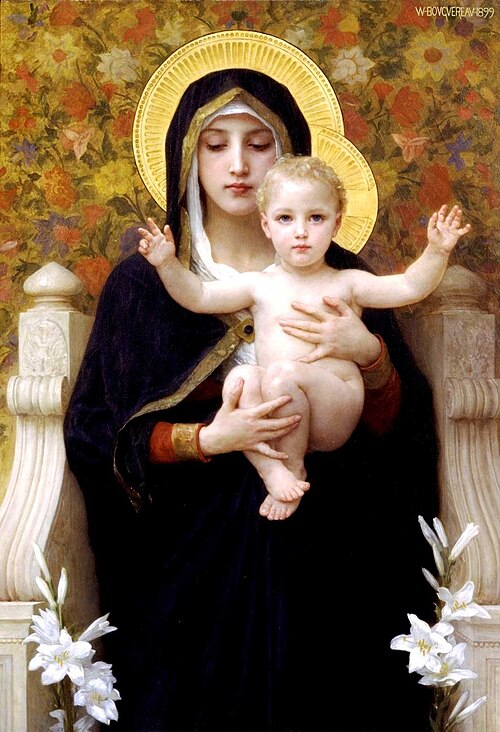
Mary, the mother of Jesus, not only conceived the Messiah, the Word made flesh, but mothered him. Her mandate was to raise him through his formative years, to nurture him, to teach him, to comfort him – and to prepare him for his divine calling. In every way, Mary was our Lord’s mother. Even at the cross, Mary never abandoned her son, but rather saw his mission to fulfillment – until “it [was] finished.” Mary even experienced suffering as she watched her son be mocked and crucified. This was as Simeon had prophesied to her at the presentation of the child Jesus at the temple:
“… and a sword will pierce through your own soul also…” (Luke 2:35)
Most Bible-believing Christians would affirm the above, but if we may delve into Catholic and Eastern Orthodox theology for a moment, according to tradition, it was at the cross that Jesus gave Mary to the Church, to Christians, to his “beloved disciples” – in giving her to St. John. This belief carries with it a perspective on the Communion of Saints that is not shared among Christian traditions. However, the proposition was that Jesus is the first born among many brethren, and all we have is his, including his Mother.
“When Jesus saw his mother and the disciple whom he loved standing beside her, he said to his mother, “Woman, here is your son.” Then he said to the disciple, “Here is your mother.” And from that hour the disciple took her into his own home. (John 19: 26, 27)
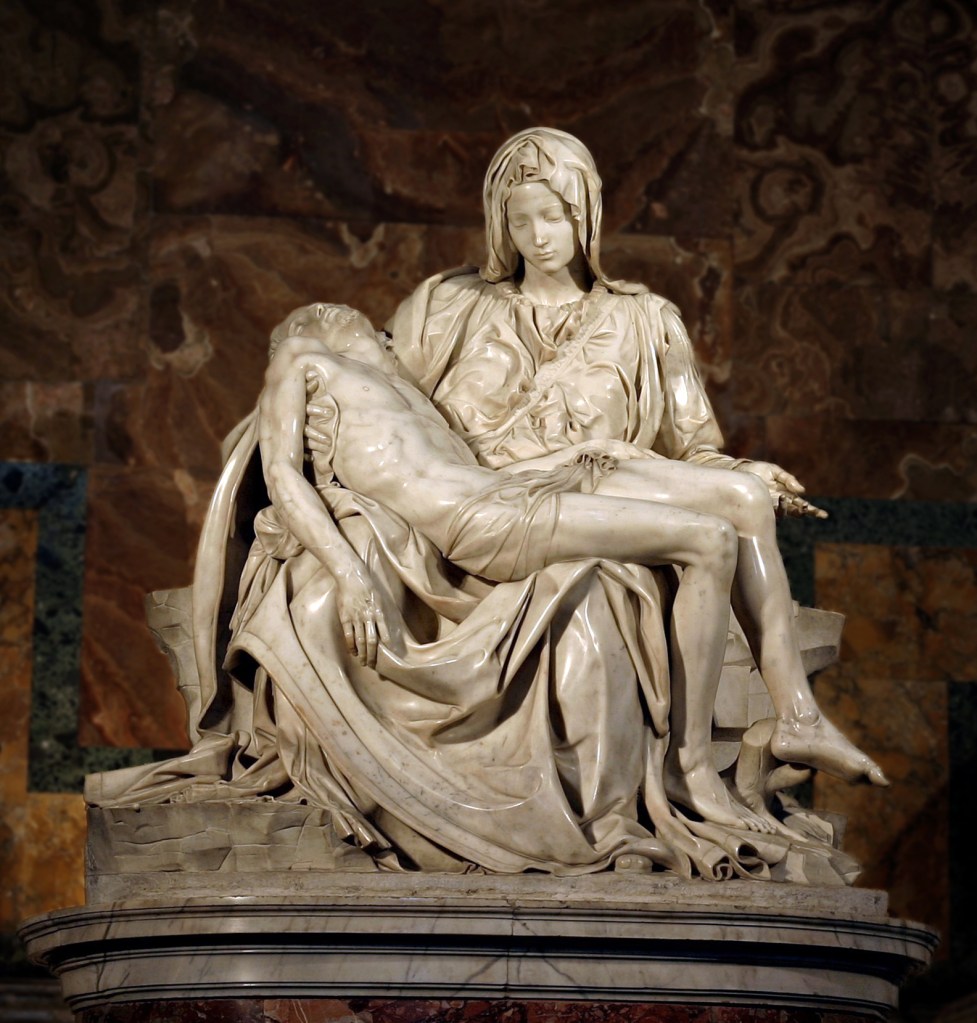
Interestingly, at the time of the Reformation, even Martin Luther wrote at length regarding Mary’s maternity for all Christians:
It is the consolation and the superabundant goodness of God, that man is able to exult in such a treasure. Mary is his true Mother, Christ is his brother. God is his father. (Martin Luther, Sermon, Christmas, 1522)
Mary is the Mother of Jesus and the Mother of all of us even though it was Christ alone who reposed on her knees…If he is ours, we ought to be in his situation; there where he is, we ought also to be and all that he has ought to be ours, and his mother is also our mother. (Martin Luther, Sermon, Christmas, 1529).
This belief in Mary’s maternity for Christians seems to be held by Church Fathers, the early Christian Church, and has its roots deep in scripture. In the same way that Eve was the mother of the living, Mary became the mother of the Church. Eve was a type of Mary:
“Eve was called the mother of the living …after the fall this title was given to her. True it is…the whole race of man upon earth was born from Eve; but in reality it is from Mary the Life was truly born to the world. So that by giving birth to the Living One, Mary became the mother of all living.” (St. Epiphanius, Against Eighty Heresies, 78,9, written c. 374)
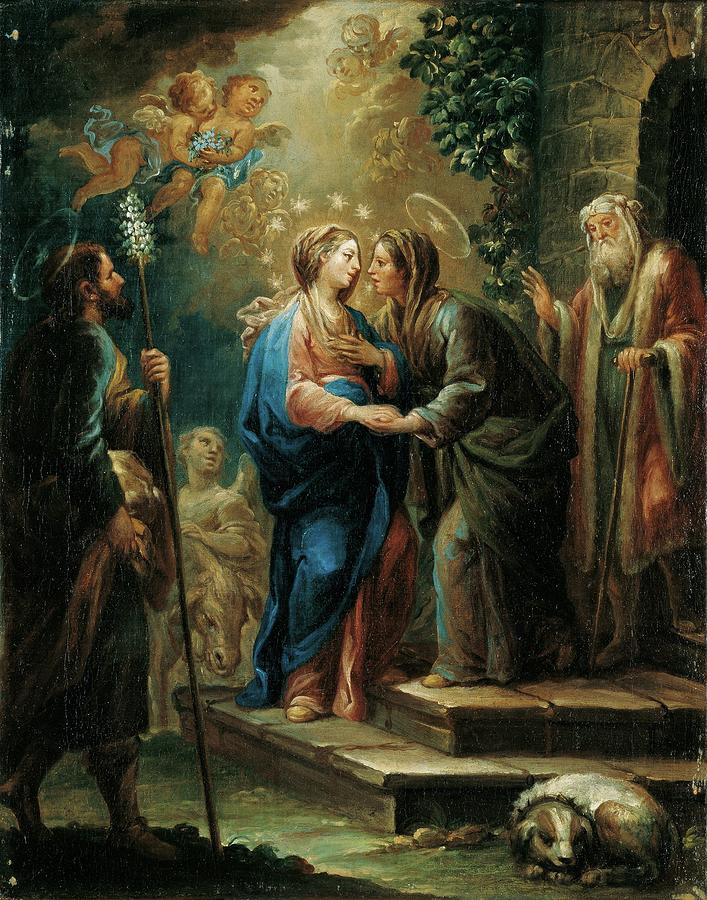
How is it that Mary is the Mother of the living, of the Church, by virtue of being the Mother of Christ? We will now move to the earliest Marian teaching of universal acceptance, one that is critical for Christianity and for the divinity of Christ, and we must start in Luke’s Gospel: When a pregnant Mary visits her cousin Elizabeth, she is crowned with a Spirit-filled proclamation of who she is, and who she carries (as John the Baptist “dances” in Elizabeth’s womb):
“And when Elizabeth heard the greeting of Mary, the babe leaped in her womb; and Elizabeth was filled with the Holy Spirit and she exclaimed with a loud cry, “Blessed are you among women, and blessed is the fruit of your womb! And why is this granted me, that the mother of my Lord should come to me?” (Luke 1: 41 – 43)
The mother of my Lord. The mother of Jesus. He who is God the Son; who carries two natures– divine and human – united in one person. According to Christian theology, Mary gave birth to Jesus Christ, who was and is a divine person. Mary’s status is necessary for the doctrine of the Incarnation. Lest we fall into the gnosticism of the first centuries, we must ask: At what point did Jesus become divine? As the Nicene Creed stated against the heretics in the late 4th Century:
“…God from God, Light from Light, Begotten, not made, consubstantial with the Father … and by the Holy Spirit was incarnate of the Virgin Mary, and became man…”
Here is the key to this mystery: with this predestined vocation to be the Mother of Christ, Mary became Theotokos (Gk. God-bearer). This was Mary’s status, one of her names in the early church, through the first ecumenical councils and the canonization of the New Testament.
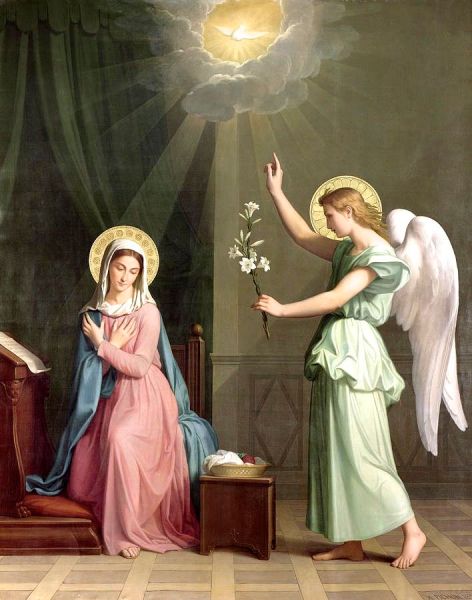
At this point, we must pause and state the obvious: Mary is a created being and did not give Christ’s divinity to him. Nor can it be said that she gave birth to God the Father, but rather that she conceived her child according to the Father’s will. Her submission to God, her “fiat” – enabled the mystery of the Incarnation. It is absurd to even suggest that somehow Mary is in any way equal to the Creator of the cosmos. Furthermore, it is heresy to say that Mary is in any way equal to Christ. Thankfully, no one of sound faith is saying this. Nevertheless, this ancient title was given to Mary, and was affirmed by the early Church – and fits in the most logical sense: if Jesus is God, and Mary is the mother of Jesus, she is indeed the mother of God. Mary did not give birth to a “nature” but to a person, and Christ’s divinity was not placed on him after his birth – that’s Gnostic language. We gain clarity when we read the words of the Angel Gabriel in the Gospel of Luke:
“The Holy Spirit will come upon you, and the power of the Most High will overshadow you; therefore the child to be born will be called holy, the Son of God. (Luke 1:35)
Mary, a created being, conceived Jesus, the God-Man – by the power of the Holy Spirit; so that the Jewish Messiah would bring divinity and humanity together at conception. This is the story of Salvation; of the divine life. This is how the logos can tabernacle among us (echoing the first chapter in John’s Gospel). We must remember that anything said of Mary is ultimately to magnify Christ and his redemptive mission. Joyfully, no one does this as beautifully as Mary herself, when she sings in her Magnificat. All Mariology must magnify Christology.

(1481)
“Him whom the heavens cannot contain, the womb of one woman bore. She ruled our Ruler; she carried Him in whom we are; she gave milk to our Bread.” (St. Augustine)
Again, Martin Luther, the key Reformer, even wrote at length regarding this belief:
“God did not derive his divinity from Mary; but it does not follow that it is therefore wrong to say that God was born of Mary, that God is Mary’s Son, and that Mary is God’s mother . . . She is the true mother of God and bearer of God . . . Mary suckled God, rocked God to sleep, prepared broth and soup for God, etc. For God and man are one person, one Christ, one Son, one Jesus, not two Christs . . . just as your son is not two sons . . . even though he has two natures, body and soul, the body from you, the soul from God alone.” (Martin Luther, On the Councils and the Church, 1539)
(As an aside, the theological principle used to define Mary’s title is called the communication of idioms, which is to say: whatever is true regarding Christ’s two natures, is true about Christ himself. If Christ is God, and Christ was born in a manger, then God was born in Bethlehem – although God is surely eternal.)
Let’s close with some history. Mary’s given name as Theotokos declared Christ’s divinity among the heresies in the early years of Christianity. Early in the 5th century, the (heretic) Bishop Nestorius, along with some other theologians at the time, made known they disapproved of the title “Mother of God,” and preferred “Mother of Christ” – worried that it could imply Mary is somehow involved with Christ’s divinity. However, they also argued against Christ’s unified natures, saying the Virgin gave birth to Christ’s human nature, but not his divine nature; therefore, separating Christ’s unique quality as the God-Man. (Christians would still call these heresies today). The early Church disagreed, and Pope Celestine I strongly defended Mary’s given title. St. Cyril of Alexandria – a significant theologian of the day – came to the aid of these debates and affirmed that a mother does not give birth to a nature; but to a person. Though Mary did not “make” God, she most surely gave birth to Him. This ferocious debate evoked another ecumenical council to settle the dispute. Significantly, this council took place in Ephesus (431 A.D.), the city where tradition says Mary and John the Apostle lived after fleeing Jerusalem. This council was so critical for the early church, that passionate Christians from all over came to Ephesus – in torchlit procession – to wait for the council’s proclamation; and joyfully celebrated in the streets when the verdict was given, and Mary’s title was reaffirmed.

This opens up a Pandora’s box of questions for Christians. If we accept the theology of the Theotokos, what does that matter to our personal faith journey? On the surface, solid ground is always better than shifting sand, and the truth of the Incarnation – namely, Christ’s divinity – is essential to Christianity. Sound doctrine matters. We might even come to terms with the fact that Mary is indeed in heaven, wearing a crown – just as Moses and Elijah are in heaven; and that she – in some way – undid the knot of Eve’s disobedience by her “yes” to bear God’s son. Maybe we even believe deep down that she is praying for us, as the saints in the Book of Revelation pray for us. But opening this idea of the “Communion of Saints” – interpreted as asking Saints in heaven to pray for us, is not the direction of this piece. Speaking of Revelation, maybe our restored Mariology will help us see the imagery of St. John’s Apocalypse (Chapter 12). However, Christians will have to come to their own convictions regarding what they can comfortably accept. Conscience is key. It seems at the very least that Christians should “call [her] blessed,” as she sang in her Magnificat.
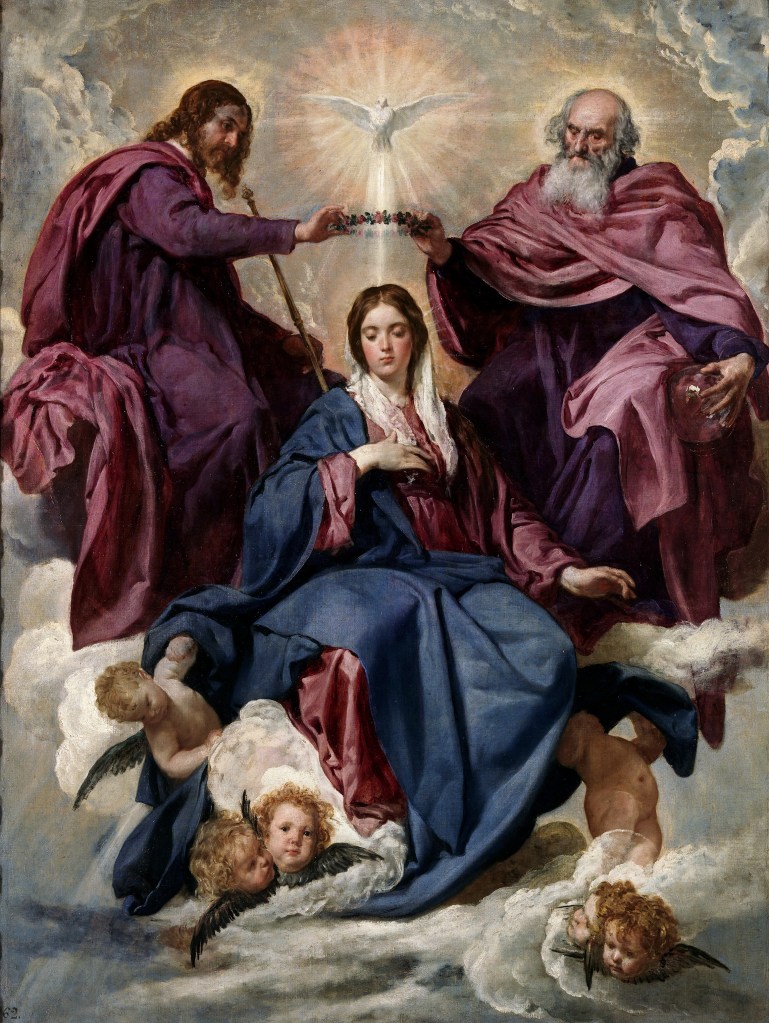
“Devotion to the Mother of our Lord in no way detracts from the adoration of her Divine Son. The brightness of the moon does not detract from the brilliance of the sun, but rather bespeaks its brilliance. The baptismal water does not detract from Christ’s power of regeneration. The preaching of men does not diminish the glory of God. Never has it been known that anyone who loved Mary denied the divinity of her Son. But it very often happens that those who show no love for Mary have no regard for the divinity of her Son. Every objection against devotion to Mary grows in the soil of an imperfect belief in the Son. It is a historical fact that as the world lost the Mother, it also lost the Son. It may well be that, as the world return to love of Mary, it will also return to a belief in the divinity of Christ.” (Fulton J. Sheen, Three to Get Married)






 Traditional Faith Blog